
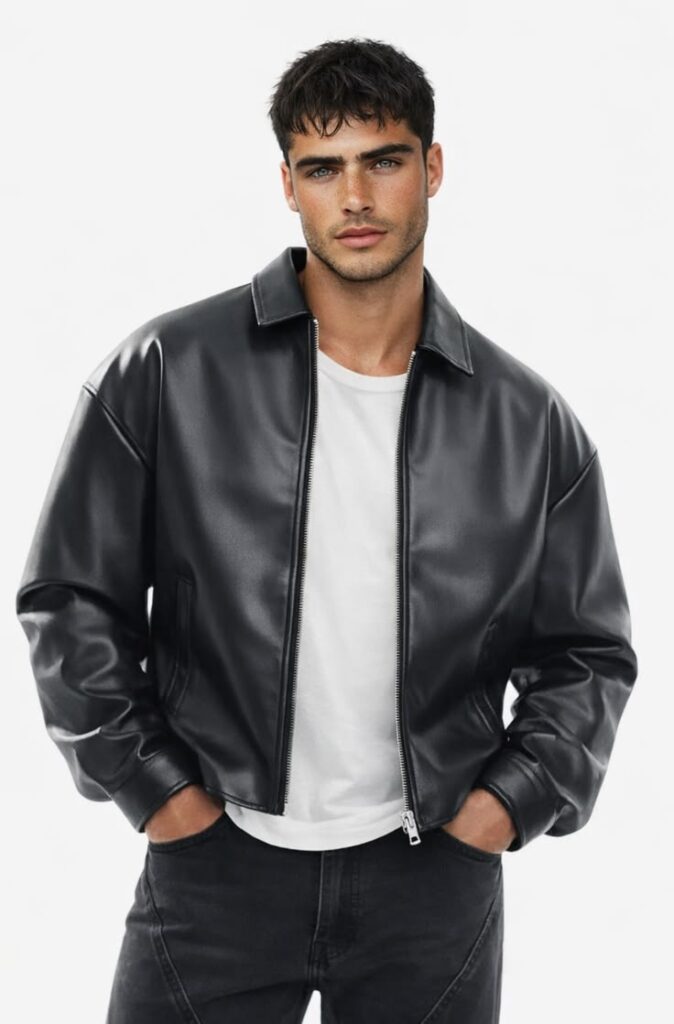
The leather jacket has never really gone away — it just keeps reinventing itself. In 2025, it’s having one of its most exciting moments yet, showing up everywhere from weekend street style to boardroom-adjacent fits. Here’s what’s trending and how to wear it right.
The Ultimate Men’s Leather Jacket Guide 2026: Trends, Styling, and How to Know You’re Buying the Real Deal
The leather jacket is not a trend. It’s a permanent fixture in men’s fashion that simply evolves with the times. In 2026, it’s evolved into something more versatile, more considered, and more exciting than ever. Here’s everything you need to know — what’s trending, how to wear it, and how to make sure you’re actually getting quality leather before you spend a rupee.
WHY IT’S TRENDING HARDER THAN EVER IN 2026
A few things have converged to push the leather jacket back to the top. Menswear as a whole has shifted toward investment dressing — buying fewer, better things that last. Leather fits that perfectly. At the same time, the rise of quiet luxury aesthetics and old-money styling has put premium materials front and center. Leather reads expensive, timeless, and effortlessly masculine without screaming for attention. Social media has also played its part — the rugged, textured visual of a great leather jacket photographs beautifully, and that’s kept it constantly in rotation on every style platform going.
THE TYPES YOU NEED TO KNOW
Biker Jacket The original. Asymmetric zip, wide lapels, shoulder hardware. Still the most recognisable leather jacket on earth and still the coolest. Fitted through the body, slightly cropped. Pairs with everything from denim to tailoring.
Bomber Jacket Relaxed, round-necked, ribbed cuffs and hem. The bomber has grown up in 2026 — thicker leather, cleaner lines, less sporty and more refined. The most versatile cut for everyday wear.
Racer Jacket Minimal. Band collar, simple zip, no fuss. The racer is for men who want the leather jacket energy without the hardware. Looks exceptional under a blazer or over a turtleneck.
Leather Blazer The 2026 newcomer to the mainstream. Cut exactly like a suit jacket but in supple, lightweight leather. This is the piece replacing the traditional blazer in smart-casual wardrobes right now.
Trucker Jacket Western-cut, chest pockets, button front. The leather trucker is gaining ground as the relaxed, lived-in option. Slightly oversized, it layers easily over hoodies and knitwear.
Long Leather Trench The statement piece of the moment. Knee-length or longer, worn over almost anything. High-impact, zero effort required.
HOW TO STYLE IT — OUTFITS THAT ACTUALLY WORK
With Wide-Leg Trousers The proportional contrast between a fitted jacket and relaxed wide-leg trousers is the silhouette of 2026. Keep the rest simple — plain tee or shirt, clean shoes. Let the shape do the work.
Over a Chunky Knit Texture clash done right. An oversized knit sweater peeking out below the hem of a leather jacket looks intentional and interesting. Go for earthy tones — brown leather, oatmeal knit.
Over a Suit The power move. Replace your overcoat with a slim leather jacket over a well-cut suit. Dark leather, dark suit, sharp shoes. Effortlessly authoritative.
With Linen Trousers in Summer Unlined, lightweight leather over linen trousers and a plain tee. Tan leather works best here. It sounds counterintuitive — it looks exceptional.
With Straight-Leg Denim Never gets old. Dark denim, fitted biker jacket, Chelsea boots. This combination has existed for 70 years and will exist for 70 more.
Double Leather The bold direction this year. Leather jacket over leather trousers or a leather shirt. Keep everything in the same tonal family — all black or all brown — so it reads as a deliberate statement.
COLOURS WORTH INVESTING IN
Classic Black — Eternal. Pairs with everything. Your first leather jacket should almost always be black.
Chocolate Brown — The quiet staple everyone is rediscovering. Warmer and more versatile than black for daytime wear.
Cognac / Tan — Rich, warm, eye-catching without being loud. Looks incredible against dark denim or olive trousers.
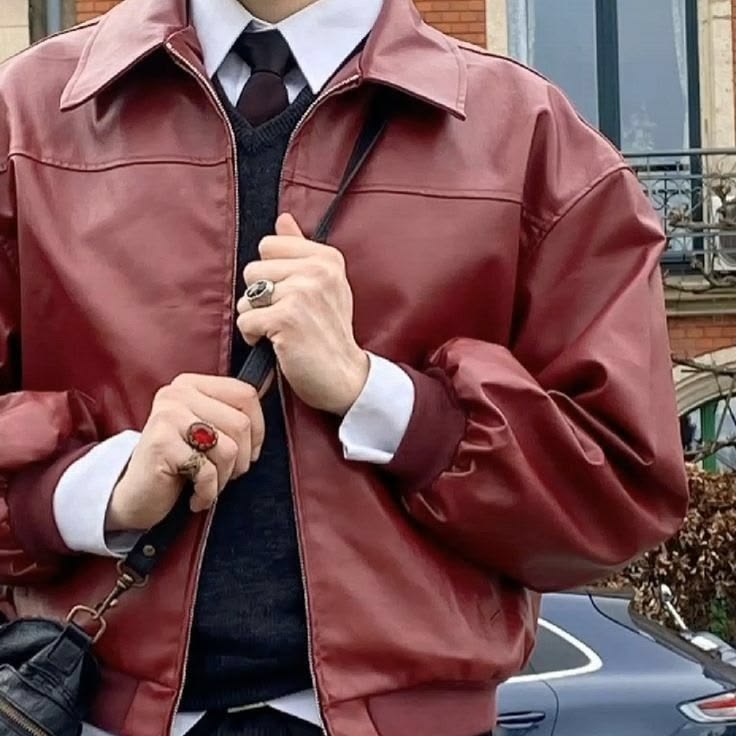
Oxblood Red — The standout colour of 2026. Deep, dark, and deeply wearable. Not as bold as it sounds.
Slate Grey — Replacing charcoal as the modern neutral. Works as a background piece that lets everything else pop.
Olive Green — Crossing over from military outerwear into leather and it belongs there. Earthy, rugged, and fresh.
QUICK TECHNIQUES TO CHECK LEATHER QUALITY BEFORE YOU BUY
This is the part nobody tells you about. Most men can’t tell real leather from convincing fakes in a shop. Here’s how to know what you’re actually holding.
The Smell Test Genuine leather has a distinctive organic, slightly earthy smell that’s impossible to fake convincingly. Faux leather and bonded leather smell plasticky or chemical, especially when warm. Hold the jacket close and breathe in. Your nose knows.
The Pore Test Look at the surface under good lighting or use your phone torch. Real leather has irregular, naturally occurring pores — no two patches look identical. Fake leather has a uniform, repeating pattern that looks almost printed. Irregularity is authenticity.
The Stretch and Recovery Test Press your thumb firmly into the leather and release. Genuine leather will wrinkle slightly under pressure and recover slowly, leaving a faint impression briefly. Faux leather either doesn’t wrinkle at all or stays creased. Real leather has memory.
The Edge Test Look at the seams and cut edges of the jacket. Real leather edges are rough, slightly fibrous, and uneven — you can see the grain of the hide. Bonded or faux leather edges are smooth, uniform, and sometimes slightly peeling if the jacket has any age on it.
The Water Drop Test Put a tiny drop of water on an inconspicuous area. Genuine leather will slowly absorb it, darkening slightly. Faux leather will bead the water on the surface because it’s non-porous. Watch what happens in 30 seconds.
The Weight Test Real leather has a natural weight and substance to it. Pick the jacket up — if it feels surprisingly light or flimsy for its size, that’s a warning sign. Full-grain leather has a satisfying heft that synthetic materials struggle to replicate.
The Label Test Always read the label. Genuine leather products are required to state the material. Look for “100% genuine leather,” “full-grain leather,” or “top-grain leather.” If it says “man-made materials,” “PU leather,” or simply avoids stating the material altogether — you have your answer.
THE LEATHER HIERARCHY — KNOW WHAT YOU’RE PAYING FOR
Full-Grain Leather — The best. The entire hide, untouched and unsanded. Develops a beautiful patina over years of wear. Expensive and worth every bit of it.
Top-Grain Leather — The surface layer of the hide, lightly sanded to remove imperfections. Still excellent quality, slightly more uniform in appearance.
Genuine Leather — Lower layers of the hide, heavily processed. Durable enough but won’t age as beautifully. Budget-friendly and widely available.
Bonded Leather — Leather scraps and fibres bonded together with polyurethane. Often peels and cracks within a few years. Avoid if you want longevity.
THE BOTTOM LINE
A great leather jacket is one of the most honest purchases you can make in fashion. It doesn’t pretend to be something it’s not. It gets better with use, tells a story through its wear, and outlasts virtually everything else in your wardrobe if you treat it right.
Know your types. Dress it with intention. And before you buy — smell it, stretch it, check the edges, and read the label. Your jacket should last you decades. Make sure it earns that time.